The Sensitive Man: Sensitive Fathers, Sensitive Sons, and the Emotional Inheritance of Men6/16/2026  A Blog about Sensory Processing Sensitivity from the Worldview of a High-Sensing Male
Word Count: 2195 Estimated Reading Time: 9:14 minutes. Blog #260 Father’s Day and the Question We Carry Father’s Day is usually celebrated with cards, backyard meals, phone calls, memories, and perhaps a few sentimental reflections on what fathers mean to us. Yet for many men, especially highly sensitive men, Father’s Day can also stir deeper questions. It can make us wonder not only what kind of father we had, but what kind of father we became. It can bring up pride, tenderness, gratitude, unfinished grief, and that nagging question many fathers carry quietly. :Was I good enough? This year, that question feels especially layered for me. My son is now a father to a son. He is a sensitive man raising a sensitive boy. I am a sensitive father and grandfather looking back across three generations of men, seeing threads of tenderness, silence, distance, love, uncertainty, and inherited emotional patterns. My father had his own limitations around closeness and affection, shaped by the world he grew up in and the wounds he carried. I carried some of that forward, even when I did not want to. The harder truth is that for much of the time I was raising my children, I did not know I was a highly sensitive person. I did not have the language of sensory processing sensitivity. I did not know why I felt things so deeply, why I could become overwhelmed, why conflict cut so sharply, or why I often needed time to retreat and recover. I was fathering without a map of my own temperament, and that changes how I look back on my life as a dad. The Emotional Inheritance of Men Men inherit more than hair lines, eye color, mannerisms, or family names. We inherit emotional weather. We inherit patterns of closeness and distance, spoken and unspoken rules about affection, and quiet instructions about what men are allowed to feel. In many families, boys learn early that love may be present but not always expressed, that concern may show up as correction, and that tenderness can be hidden behind duty. For sensitive sons, what is unspoken is often felt anyway. We sense the tension in the room, the sadness behind the eyes, the anger under the silence, and the love that cannot quite find its way into words. That is one of the gifts and burdens of being highly sensitive. We do not simply hear what is said; we absorb the emotional field around it. Elaine Aron’s work on sensory processing sensitivity describes this trait as involving deeper processing, stronger emotional responsiveness, and greater sensitivity to subtle stimuli (Aron, 1996; Aron & Aron, 1997). So, when I look back at the line of men in my family, I find myself asking: What did I receive? What did I repeat? What did I try to heal? That may be one of the central tasks of HSP fatherhood. We are not only raising children; we are deciding what emotional inheritance continues and what finally ends with us. Raising Children Without the HSP Map Many HSP fathers raised children before they had any useful language for high sensitivity. We knew we felt deeply, but we may not have known that our nervous systems were processing more information than others seemed to notice. We may have reacted strongly, worried intensely, withdrawn when overstimulated, or struggled to explain why ordinary family life sometimes felt like too much input all at once. Without the HSP framework, sensitivity may have looked like moodiness, impatience, anxiety, overprotection, emotional intensity, or retreat. A sensitive father may have loved his children deeply while still struggling to regulate his own inner life. He may have wanted closeness but was not always able to sustain it. He may have been present in practical ways yet less available emotionally, not because he lacked love, but because he lacked self-understanding. Understanding this does not erase the past. It does not excuse every mistake. What it does is allow a more honest interpretation. When we learn that high sensitivity is a real temperament trait, not a personal defect, we can look back with both compassion and a sense of responsibility. We can see the man we were more clearly, and then we can ask whether the man we are now is willing to keep growing. Passing on Sensitivity Research suggests that environmental sensitivity has a significant heritable component, meaning sensitivity often runs through families (Assary et al., 2020). For those of us who see this trait in our children and grandchildren, that knowledge can be both affirming and sobering. We may have passed on depth, empathy, intuition, creativity, awareness, and a finely tuned moral and emotional radar. We may also have inherited a nervous system that can be easily overwhelmed by noise, conflict, pressure, injustice, and excessive stimulation. Passing on sensitivity is not passing on weakness. That distinction matters. Sensitive boys do not need to be toughened out of their temperament, but they do need to be guided in how to carry it well. They need help learning boundaries, self-regulation, courage, resilience, and self-trust. They need to know that feeling deeply does not make them fragile, and that being emotionally aware does not make them less male. This is where sensitive fathers and grandfathers have something important to offer. We can help younger HSP males understand themselves earlier than we understood ourselves. We can give them words we did not have. We can normalize what once confused us. We can teach them that sensitivity is not an excuse to avoid life but a way to enter life with greater awareness. Was Doing the Best You Could Good Enough? There is a phrase many parents use when looking back: “I did the best I could.” Sometimes that is deeply true. Sometimes it is the only fair way to hold the past. Yet it can also become a shield if we use it to avoid reflection. Doing the best we could with the awareness we had then does not mean there is nothing to learn now. A better question might be: When I knew better, did I try to do better? That question leaves room for grace and accountability. It allows us to be human without becoming evasive. It recognizes that parenting is done in real time, under stress, with limited knowledge, personal wounds, financial pressures, marital tensions, work demands, and inherited patterns we may not fully understand until years later. Good enough fatherhood may not mean flawless fatherhood. It may mean love plus repair, presence plus humility, and effort plus growth. The research on parent-child relationships has long recognized that emotional misattunements happen in every family, but repair matters. Children do not need perfect parents. They need parents who return, reconnect, and take responsibility when things go wrong (Tronick, 1989; Siegel & Hartzell, 2003). Do HSP Men Need to Be Better Fathers? Do HSP men need to be better fathers than other fathers? Not in the sense of moral superiority. We are not more noble because we are sensitive, and we are certainly not exempt from ordinary human failure. But perhaps HSP fathers need to be more conscious fathers, because we notice more, feel more, and can unintentionally transmit more emotional intensity into the family system. Our gift is attunement. Our challenge is regulation. A sensitive father may know when something is wrong before anyone says a word. He may sense his child’s fear, sadness, embarrassment, or disappointment with remarkable accuracy. That can be a beautiful gift when it leads to empathy. It can become a problem when the father’s own nervous system becomes flooded, and the child begins to feel responsible for the father’s emotional weather. This is why HSP fathers must learn themselves. We need to know when we are overstimulated, when we are personalizing, when we are withdrawing, and when we are carrying old wounds into present moments. Emotional depth is not enough by itself. It must be paired with steadiness. Showing Up With Wounds No father arrives healed. Every father brings a history into the room. Some bring childhood loneliness. Some bring anger they never learned to name. Some bring fathers who loved them but could not say it. Some bring shame, fear, abandonment, addiction, emotional distance, or the long ache of not being fully seen. The goal is not woundless fatherhood, because that is not available to any of us. The goal is to avoid making our wounds the child’s burden. A father can be imperfect and still be deeply loving. He can have tender places and still provide safety. He can miss the mark and still repair. He can carry grief and still offer joy. Presence matters. Showing up matters. Listening matters. Apologizing when needed matters. Staying connected matters. Affection matters. Not the grand performance of fatherhood, but the steady accumulation of moments in which a child knows, “My father sees me. My father cares. My father may not always understand me, but he is trying.” Supporting HSP Sons and Grandsons HSP boys need permission to be fully male and fully feeling. They need fathers and grandfathers who do not shame tears, caution, tenderness, creativity, empathy, or the need for quiet. They also need models of strength, accountability, courage, humor, and resilience. Sensitivity should not become a cage. It should become a compass. The sensitive boy needs to hear that there is nothing wrong with him, but he also needs to learn that the world will not always adjust to his nervous system. He needs skills, not just validation. He needs to know how to step away when overwhelmed, how to speak up when hurt, how to recover after conflict, and how to stay open without becoming porous. This may be one of the great privileges of grandfatherhood. As grandfathers, we get another angle on the male line. We can be softer without being weaker. We can be playful without being dismissive. We can say the loving words perhaps our fathers struggled to say, and perhaps we ourselves did not say often enough. We can become part of the healing, not by pretending the past was perfect, but by making the present more conscious. The One Shot We Get Parenting has no rehearsal. We raise each child once, in real time, with whatever awareness we have at the moment. That reality can be painful when we look back and see moments we wish we had handled differently. Every parent has those. Every father has words he would like to retrieve, silences he would like to fill, and moments of impatience he would like to soften. But fatherhood does not end when children become adults. The form changes, but the relationship continues. Repair can continue. Support can continue. Love can become more plainly spoken. We can still be fathers to adult children in ways that respect their independence while offering steadiness, encouragement, and care. And with grandchildren, we are given a sacred extension of the story. Not a do-over exactly, because our children deserved the best of us then, not later. But grandfatherhood can still become a place where tenderness flows more freely through the male line. How HSP Fathers Can Do Better HSP fathers can do better by first learning their own nervous systems. We need to know what overwhelms us, what restores us, and what old wounds still shape our reactions. Self-awareness is not self-absorption when it helps us love others more cleanly. We can speak love plainly and often, because children should not have to decode affection from duty alone. We can repair quickly when we miss the mark, not with dramatic guilt, but with simple ownership. We can listen without immediately correcting, because sometimes a child needs understanding before instruction. We can teach emotional language without making emotion the whole identity. A boy can learn to say he is sad, angry, afraid, proud, embarrassed, or overwhelmed, and still learn discipline, responsibility, and courage. We can model boundaries rather than withdrawal, showing that taking space is healthy when it is explained and temporary, but harmful when it becomes emotional disappearance. We can be affectionate without embarrassment. We can let our sons and grandsons know they are not “too sensitive.” They are learning how to carry sensitivity well. That message may change the entire arc of a young man’s life. The Inheritance We Can Choose We cannot change everything we inherited. We cannot redo every fathering moment. We cannot go back and become the fully conscious HSP fathers we might have been had someone handed us the map earlier. But we can choose what continues. That may be the deeper work of sensitive fatherhood. We take what was given to us, sort through it with honesty, keep what was loving, grieve what was missing, and refuse to pass along what caused unnecessary pain. We speak love more clearly. We honor sensitivity more openly. We teach boys that men can be strong and tender, protective and emotionally honest, steady and deeply feeling. Good fatherhood is not perfection. It is presence, repair, love, and the courage to keep becoming better. For HSP fathers and grandfathers, that may be the inheritance worth leaving: men who are no longer afraid to be close. References Aron, E. N. (1996). The Highly Sensitive Person: How to Thrive When the World Overwhelms You. Broadway Books. Aron, E. N., & Aron, A. (1997). Sensory-processing sensitivity and its relation to introversion and emotionality. Journal of Personality and Social Psychology, 73(2), 345–368. Assary, E., Zavos, H. M. S., Krapohl, E., Keers, R., & Pluess, M. (2020). Genetic architecture of environmental sensitivity reflects multiple heritable components. Translational Psychiatry, 10, 143. Choi, J. K., Wang, D., & Jackson, A. P. (2021). Long-term effects of father involvement in childhood on their son’s physiological stress regulation system in adulthood. Developmental Psychobiology, 63(6), e22152. Siegel, D. J., & Hartzell, M. (2003). Parenting from the Inside Out: How a Deeper Self-Understanding Can Help You Raise Children Who Thrive. TarcherPerigee. Tronick, E. Z. (1989). Emotions and emotional communication in infants. American Psychologist, 44(2), 112–119.
0 Comments
Leave a Reply. |
AuthorBill Allen currently lives in Bend, Oregon. He is a certified hypnotist and brain training coach , author and advocate for HSP Men. He believes that male sensitivity is not so rare, but it can be confounding for most males living in a culture of masculine insensitivity which teaches boys and men to disconnect from their feelings and emotions. His intent is to use this blog to chronicle his personal journey and share with others. 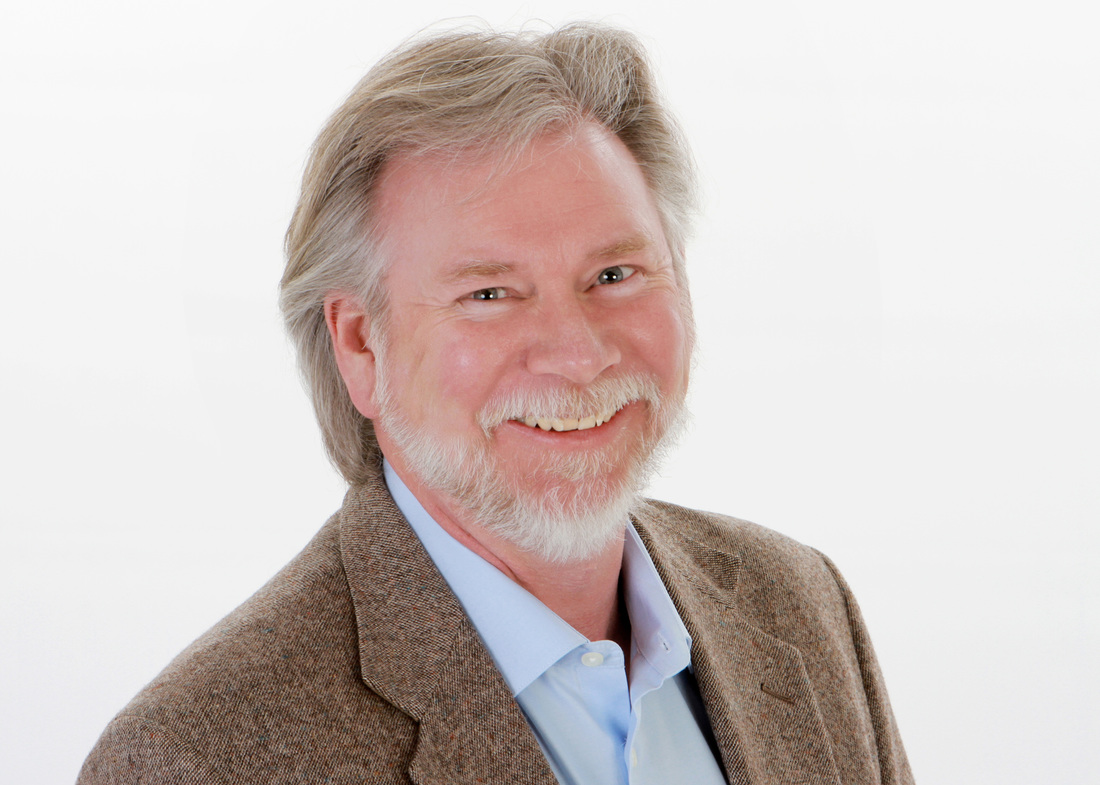
Archives
June 2026
Categories
All

|
 RSS Feed
Proudly powered by Weebly