 Blog about Sensory Processing Sensitivity from the Worldview of a High Sensing Male For the next eight to ten weeks, I am going to be providing excerpts from my upcoming book, Confessions of a Sensitive Man, An Unconditional Defense of Sensitive Men. The E-book is now available on Amazon. The hardback is coming November 4th. Please enjoy this free preview of the book. From Chapter 6 - Deep Processing and Overthinking Deep Thinking Advantages I have great regard for the deep thinking attribute that SPS banner carriers have. It allows us to process more detail in our thinking, which expands the options of the outcome of the thinking process. I believe that deep processing capabilities make HSPs great solitary thinkers. Solitary thinkers rely less on other external inputs, say from friends, family, or colleagues, and can allow for free play with ideas within their internal framework. To be certain, there are indeed external inputs, but most of those have been previously processed, categorized, and stored and are used in the thinking process in novel ways. This allows SPS thinkers to be more creative and individualistic in their thinking. This is great for creative problem solving, creating works of art, proposing new, untested ideas, and generally contributing different perspectives on old lines of thinking. Besides, our use of emotional reactivity in decision-making might provide for dredging deeply encoded information that had a similar emotion associated with it during memory encoding. As stated previously, emotional reactivity has been associated with better learning outcomes. All of this facilitates deep thinking, which I believe is the greatest value SPS individuals bring to bear in society. If HSPs trust their intuition and insights more, coupled with their deep thinking process, I believe more HSPs would be more confident in their decisions and contribute more to solving society’s problems. There seems to be a strong bias in science and our culture against the use of intuition, although, if you examine the history of science, and especially the moments in science when breakthroughs occur, intuition often is the determining factor. Since HSP intuition is a strong suit in our thinking process, encouraging and rewarding HSPs for reaching out a bit might facilitate better ideas in business, education, government, religion, the arts, and sciences. This could lead to more breakthrough thinking, more innovation, more thought-provoking considerations, and less reckless, short-sided, one-dimensional thinking. Intuition is often considered emotional thinking, but emotional thinking is not always a bad thing. Sometimes it adds an urgency, importance, and priority to decisions. It always adds a bit of humanity to thinking, which we sorely lack now. Decisions are often made for the expediency of greed, politics, or unfortunate inflexible scientific dogma. Thoughtful decision-making is a lost art these days. The world is based on machine speed thinking rather than careful and cautious deliberation. For the moment, our brains can still out process any machine on the planet. We have a group of people, within the human population that is, at least as is being proposed, who have an evolutionary purpose, adding measured thought and ideas into the vast kettle of impulsive world thought. It’s time to wake up to that. 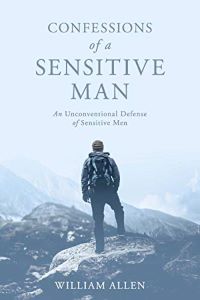 Confessions of a Sensitive Man, An Unconventional Defense of Sensitive Men
0 Comments
 A Blog about Sensory Processing Sensitivity from the Worldview of a High Sensing Male
For the next eight to ten weeks, I am going to be providing excerpts from my upcoming book, Confessions of a Sensitive Man, An Unconditional Defense of Sensitive Men. I am anticipating a release date on Amazon, et.al., sometime in late September. Please enjoy this free preview of the book. From Chapter 5 – What is Sensory Processing Sensitivity? The trait that defines the Highly Sensitive Person personality is called Sensory Processing Sensitivity—SPS. This trait, part of a larger category of traits and theories about environmental sensitivity, pertains to how organisms, in this case, human organisms, adapt to the environment by way of sensory inputs and adaptations to move toward or away from change or stimuli in order to survive. Sensory Processing Sensitivity involves increased sensitivity of the central nervous system and deeper cognitive processing of emotional, physical, and social stimuli.[i] It is estimated that 15 to 20 percent of the human population has this characteristic and supports the idea of its evolutionary value because in order for the characteristic to retain value it must be utilized by a small portion of the population. Its utility diminishes the larger the numbers of individuals within a population have this trait. This is known as negative dependency frequency.[ii] First popularized in her book, The Highly Sensitive Person, Dr. Aron was instrumental in classifying this characteristic as a trait and not a disorder, and that this trait can be positive and evolutionarily significant. She and her husband developed a standardized measurement scale, known as the Highly Sensitive Person Scale, and for children, the Highly Sensitive Child Scale, which has become the benchmark for measuring an individual’s tendencies toward high sensitivity. In addition, this trait has been observed in over one hundred non-human species of animals.[iii] The work has been built on earlier work by Eysenck and his views on introversion, Pavlov’s work on overstimulation, Gray’s work on Reinforcement Sensitivity Theory, and Jung’s work on Introversion and Extroversion.[iv] All of these personality antecedents relate in some way to how the individual reacts to stimuli in the environment. Early studies looked at this sensitivity, which focused on childhood temperaments, Thomas and Chess (1977) and Mehrabian developed a self-reporting tool that measured something akin to sensitivity. Aron believes that the innate characteristic within SPS is the reaction to environmental cues and a pause-and-check processing, especially in novel situations.[v] This has important implications for the survival skills of the species where certain individuals are more cautious and contemplative when presented with new environmental cues. This is a hallmark for the cautious nature of HSPs. Introversion studies led to the Sensory Processing Sensitivity theory, where the marker for sensory stimuli was seen to be lower in introverts than extroverts. This, coupled with the addition of a depth of processing component and the importance of emotional reactivity in learning, and the tendency toward overstimulation rounded out the parameters of the SPS theory. The emphasis here is on learning and adaptability. A real issue comes down to accurate decision-making. The emotional reactivity component of SPS that aids in evaluating a situation correctly, without the need for conscious thought, turns out to be the quickest and most efficient form of decision-making, according to Aron.[vi] The ability to analyze and decide based on emotional reactivity, memory, and unconscious learned processes appears to make the SPS individual ideally suited for analyzing a situation and making an efficient decision, which plays against type. Increasingly, the Sensory Processing Sensitivity theory is gaining traction as part of a collection of adaptive personality models that focus on individual abilities to process environmental stimuli within the Environmental Sensitivity model. As its credibility rises, it is taking a larger portion of that model and may be the central theme within how individuals react in the world. There is now some conjecture that SPS is part of a continuum that includes all members of the population, allowing it to be more broadly defined in personality theory. The idea is that there are essentially three groups of SPS types within the larger community. Those who have low SPS (also known as Daisies), comprise 20 to 25 percent of the population, those in the mid-range 45 to 50 percent of the population (the Tulips) and those most associated with this trait, the high-end SPS individuals (known as Orchids) at approximately 20 to 25 percent. The flower metaphor illustrates the environmental requirements of each of the flower species, Daisies being most environmentally adaptable with the least amount of effort/nurturing and the Orchids being the most demanding of the environment with higher requirements. This illustrates the necessity of a positive development environment on high SPS individuals, where the correlation between thriving, positive, supportive, and nurturing environments is extremely high. Sensory Processing Sensitivity Traits People with SPS are considered highly sensitive individuals. A myriad of traits are associated with this personality, many of which have to do with a rich and complex internal life. SPS individuals are generally very conscientious and diligent, tend to be more spiritual, and are moved more easily by the arts and being in nature. HSPs display more empathy and sympathy to those less fortunate or to helpless animals or creatures in need of aid. Sensitive individuals show more creativity and can be quite innovative thinkers, if not under pressure or are being watched. Studies show that HSPs have increased activation in the reward centers of the brain, flourishing in positive environments, where there is support, nurturing, and ample time to perform expected tasks. They often experience feelings of awe and satisfaction because of increased deep thinking functioning and sensory awareness. In addition, a study has shown that SPS individuals are more likely to report mystical phenomena in sensory deprivation tanks than the general population.[vii] The downside of SPS borders on neuroticism. Feelings of depression, anxiety, and stress, internalizing problems too much, lower levels of happiness in life, poor stress management strategies—and in the wrong environments, lower work satisfaction. The environment is everything to an SPS individual. Since HSPs are more sensitive to the environment, picking up subtle and not so subtle cues can create situations of overwhelm and stress. If consistent and persistent these moments can lead to self-devaluation and depression. There will be more focus on this later in the book, but suffice it to say that a bad environment for sensitives is chaotic, unpredictable, with ambiguous expectations, lack of support and empathy, loud, with high-pressure demands, and inability to process and think. [i] https://en.wikipedia.org/wiki/Sensory_processing_sensitivity [ii] https://scottbarrykaufman.com/wp-content/uploads/2013/08/Pers-Soc-Psychol-Rev-2012-Aron-1088868311434213.pdf [iii] https://en.wikipedia.org/wiki/Sensory_processing_sensitivity [iv] https://reader.elsevier.com/reader/sd/pii/S0149763418306250?token=4BB1776515ACDA4CC0506CE58BA16249C7D772B9A427B7342BFC4FF8F5B258BB385ED918DDB46C5C6176F9086AEE984A [v] https://scottbarrykaufman.com/wp-content/uploads/2013/08/Pers-Soc-Psychol-Rev-2012-Aron-1088868311434213.pdf [vi] https://scottbarrykaufman.com/wp-content/uploads/2013/08/Pers-Soc-Psychol-Rev-2012-Aron-1088868311434213.pdf [vii] Ibid. |
AuthorBill Allen currently lives in Bend, Oregon. He is a certified hypnotist and brain training coach at BrainPilots.com. He believes that male sensitivity is not so rare, but it can be confounding for most males living in a culture of masculine insensitivity which teaches boys and men to disconnect from their feelings and emotions. His intent is to use this blog to chronicle his personal journey and share with others. 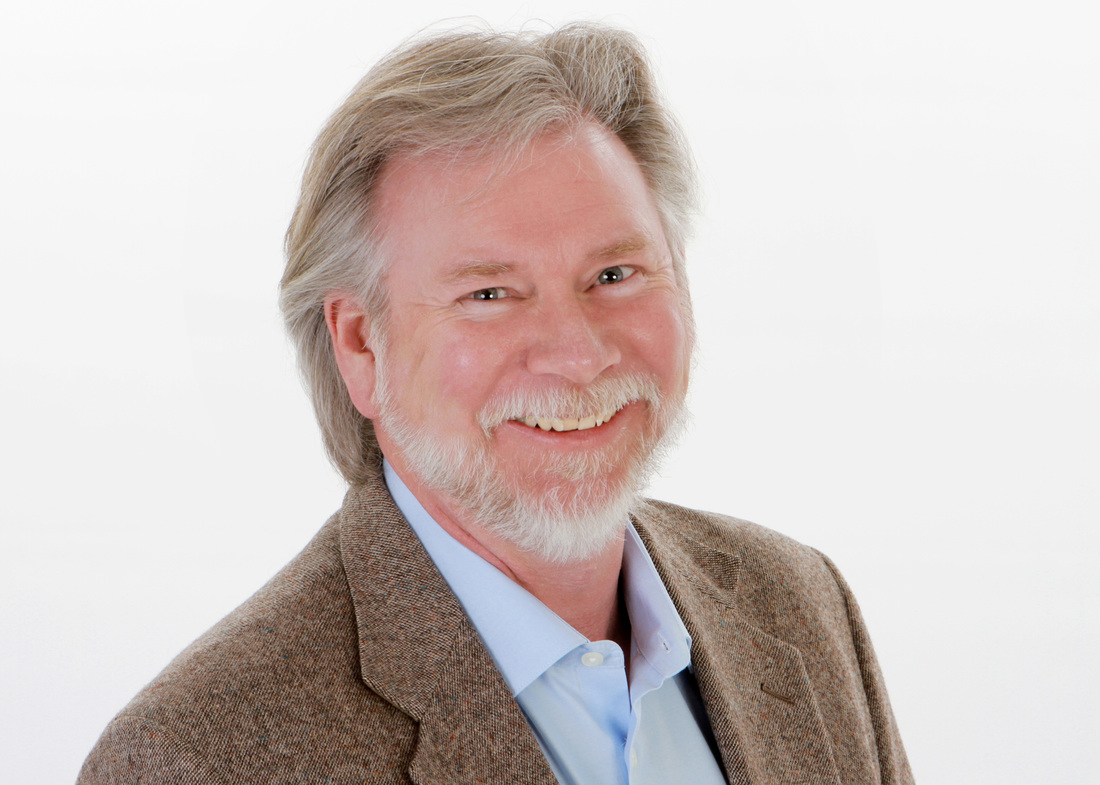
Archives
July 2024
Categories
All

|
 RSS Feed
Proudly powered by Weebly